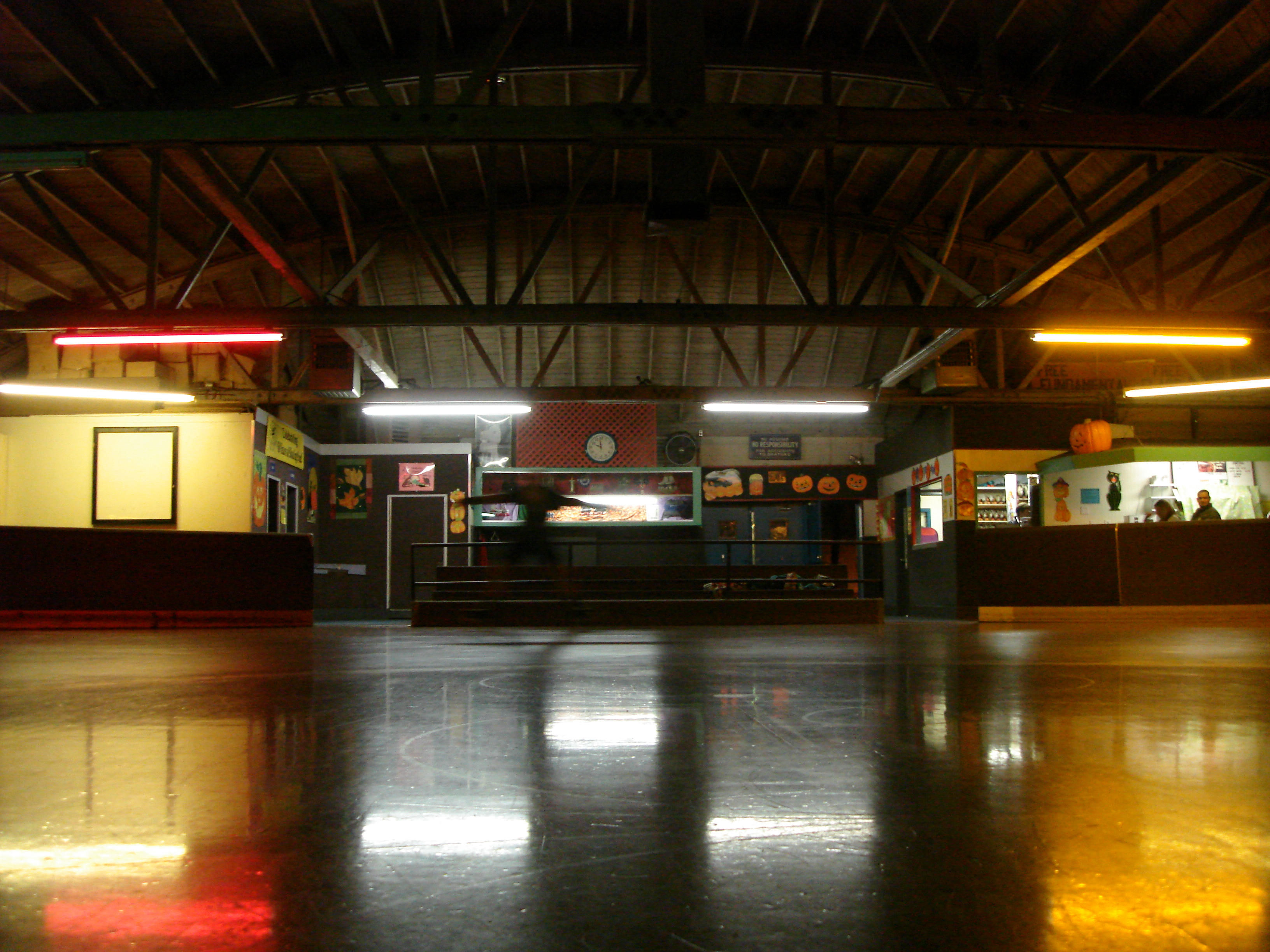
Santa Cruz, CA
2012
photo by Julio Miles
flâneur roulant performance
2007-present
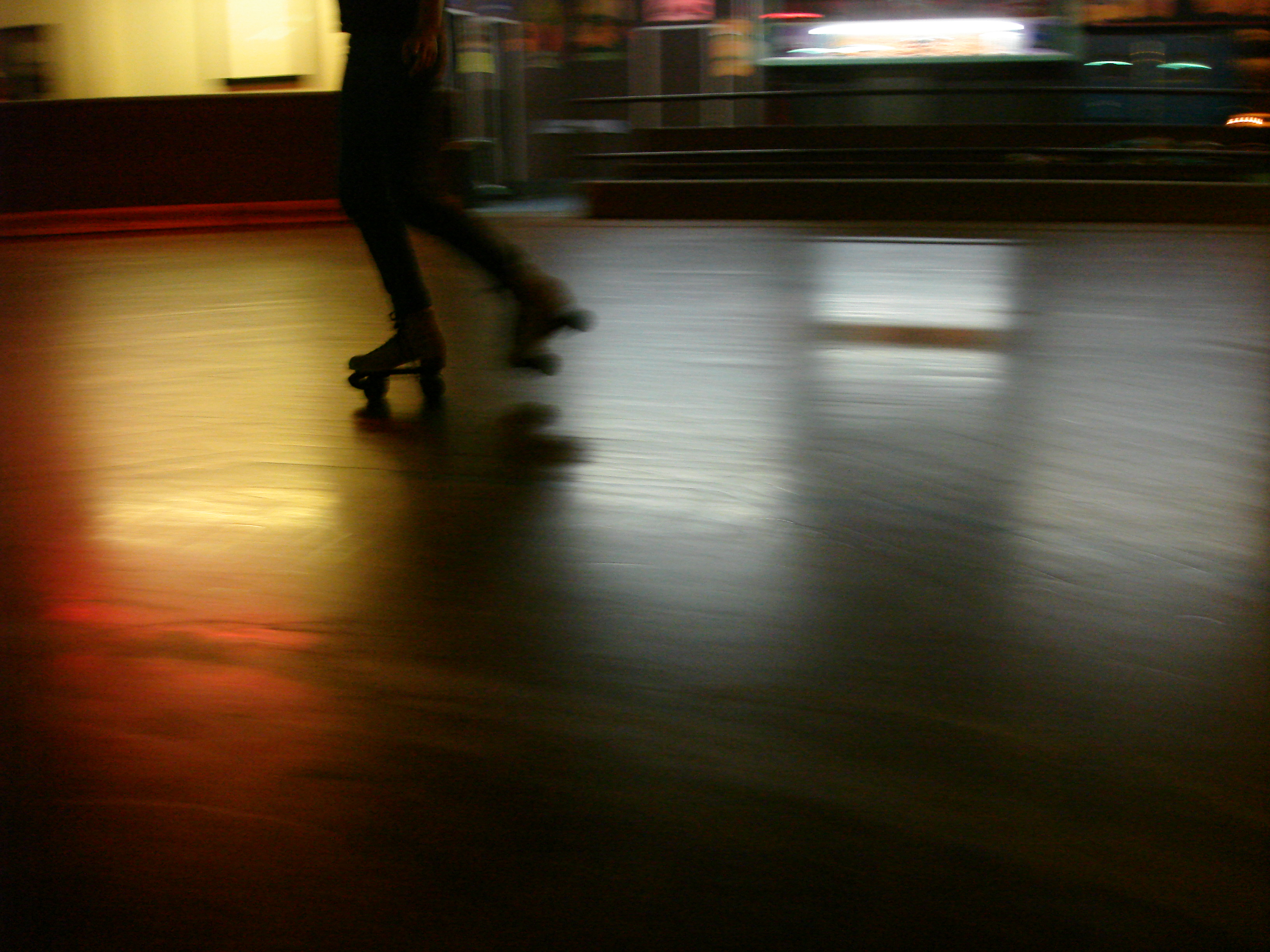
Je suis un flâneur roulant; I’m a roller skating wanderer. I skate as both spectator and spectacle, occupying the city as observer and apparition, drifting while irreducibly on display.
Flâneur roulant emerges from série dérive, but departs from its premise. The dérive, as historically conceived, relies on walking: a measured, friction-bound negotiation between body and ground. Rollerskating disrupts this contract. Glide replaces step; momentum replaces intention; balance becomes provisional.
This shift produces a different psychogeography. Encounters are accelerated or missed entirely. Trajectories extend beyond conscious navigation. The body becomes contingent—subject to slope, surface, and speed. Control is partial. Failure is imminent.
At the same time, the skating body cannot disappear into the crowd. It attracts attention and reorganizes the space around it. It collapses the distinction between spectator and spectacle. The flâneur, once anonymous, becomes hypervisible.
Initiated in 2007 and supported by an Irwin Grant from the University of California, Santa Cruz in 2011, Flâneur roulant continues as both an extension and a refusal of série dérive: a practice of drifting under altered conditions, where movement, risk, and visibility reconfigure the experience of the city.
2007-present
Je suis un flâneur roulant; I’m a roller skating wanderer. I skate as both spectator and spectacle, occupying the city as observer and apparition, drifting while irreducibly on display.
Flâneur roulant emerges from série dérive, but departs from its premise. The dérive, as historically conceived, relies on walking: a measured, friction-bound negotiation between body and ground. Rollerskating disrupts this contract. Glide replaces step; momentum replaces intention; balance becomes provisional.
This shift produces a different psychogeography. Encounters are accelerated or missed entirely. Trajectories extend beyond conscious navigation. The body becomes contingent—subject to slope, surface, and speed. Control is partial. Failure is imminent.
At the same time, the skating body cannot disappear into the crowd. It attracts attention and reorganizes the space around it. It collapses the distinction between spectator and spectacle. The flâneur, once anonymous, becomes hypervisible.
Initiated in 2007 and supported by an Irwin Grant from the University of California, Santa Cruz in 2011, Flâneur roulant continues as both an extension and a refusal of série dérive: a practice of drifting under altered conditions, where movement, risk, and visibility reconfigure the experience of the city.


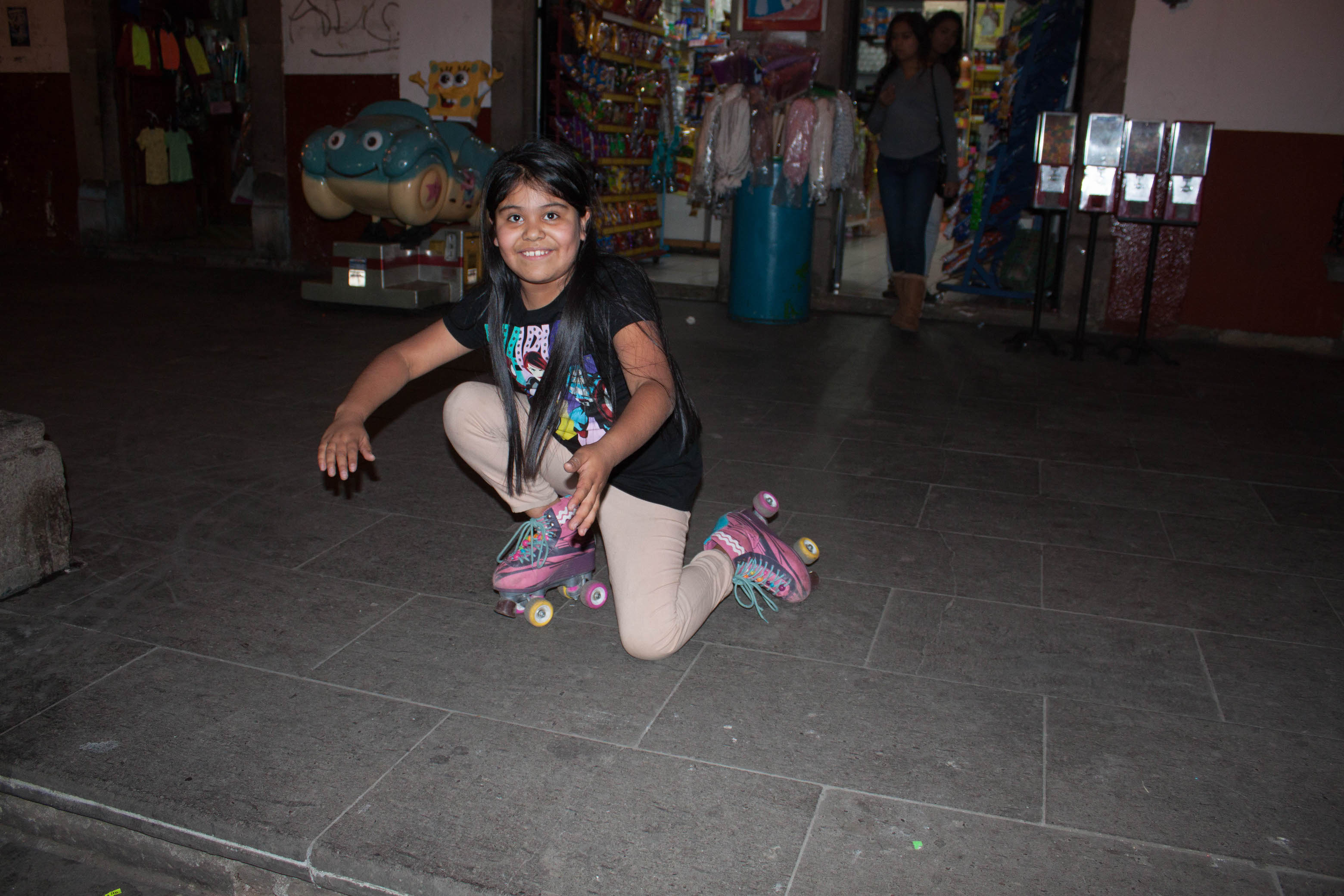
Tzurumútaro, Michoacán, MX
2018
2018

Alejandro’s, BCN, MX
2011
photo by Allen David
2011
photo by Allen David

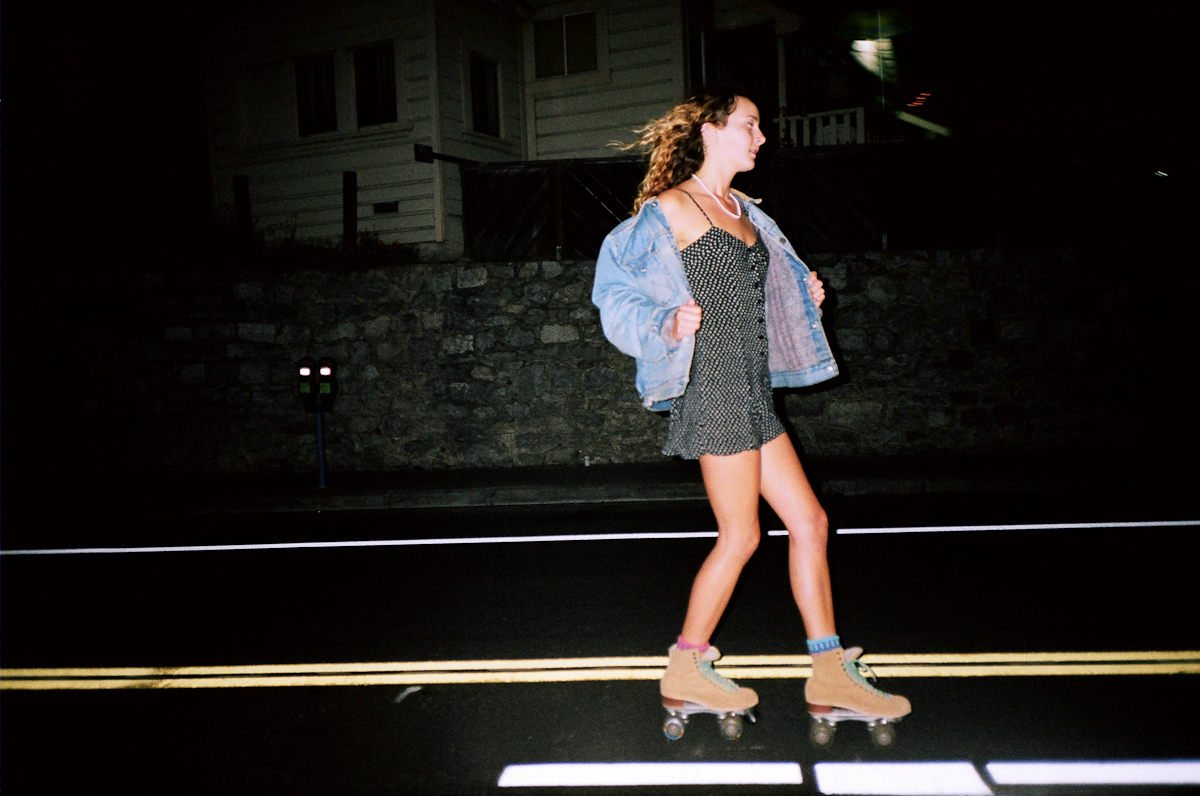


Santa Cruz, CA 2011
photos by Julio Miles


Habana & Varadero, Cuba 2012